How far do you know the history of Denia? Over time this coastal enclave has accumulated a series of curiosities worth knowing. Did you know that Hollywood shot several movies there? Did you know that it was one of the main toy-producing cities? What do you know about its history and its Muslim roots?
Here we tell you all about it, pay attention!
History of Dénia: Some curiosities that you should know
Dénia, a film destination
Although in recent years it has become more common for films to be shot on Spanish coasts, in the past this was not the case. In fact, it was one of those rare exceptions. The history of Denia and its landscapes captivated Hollywood around 1969, turning the city into a precursor Spanish location in the celluloid world.
Krakatoa, East of Java' was the title of a project that was inspired by a cataclysmic event that took place in Krakatoa around 1883. During the coastal enclave was transformed into an oriental village. Today, one of the canoes used during the filming is still preserved as a souvenir. You can find it inside the castle of Denia. Undoubtedly, an anecdote that reminds us that Denia was, literally, a film destination.
However, his relationship with the world of the seventh art did not end there. It was 1958, a particularly gray period marked by the economic aftermath of the post-war period. It was then that Samuel Bronston, an American producer, decided to choose Denia as the location for the shooting of the film Captain Jones. The project had a budget of over 200 million pesetas at the time and was spread over 4 months throughout the city. The neighbors participated as extras and lived moments of real excitement in the streets of Denia.
Such was the impact that this experience left on its inhabitants that a sculpture was erected with a Playmobil 'click' representing the protagonist of the film. You can find it in the old neighborhood of Baix La Mar.
The history of Dénia in the Toy Museum
The toy shop therefore acquired an important role in the identity of the city, something that is evident today in its popular Toy Museum. It is located inside the train station and inside you can take a tour through the history of Denia.
Its impressive collection of relics in the form of children's items, most of them dating from the 20th century, allows a faithful approach to the trajectory of a city that shone for its amazing creative resources.
On the second floor of the train station, you can find perfectly preserved toys of all kinds. Most of them made of materials such as wood or tin, the undisputed protagonists of the time, compared to the plastic that later invaded the toy industry. Boats, kitchenettes, board games, dolls or cars.
The doors of the Toy Museum are open in the mornings and afternoons and admission is free.
Denia, the great toy industry.
Denia's economic activity has been strongly marked by the production of toys. In fact, in the past it was one of the most recognized production centers of the Spanish Levant. Its toy tradition began in the early twentieth century, specifically in 1904, when the first toy factory was built. At that time the main raw material was the ojala, although with the passage of time the production process diversified to include other materials. Gradually, wood began to be implemented in the manufacturing chain, especially in the 1920s, which was the golden age of this material. This tradition spread massively throughout the 20th century with the appearance of all kinds of children's products and toys ranging from boats to bicycles, dolls and cars.
Muslim Denia
Denia is a vestige of anachronisms that have been preserved since ancient times, especially from the Muslim era. Its wall of the Fortí de Daniya is one of the best known historical references that the city has. This wall in the past delimited what we know today as the suburb of the Medina and that at that time received the name of Rabad Amir. In order to guarantee the integrity of this fortification, today it is flanked by a protective barrier and an upper roof to minimize the influence of the effects of the weather. Another good example is the Baix la Mar neighborhood. This old neighborhood has its origin in the Arrabal del Mar. Today this area is the only one that remains of the four suburbs of the Muslim era.
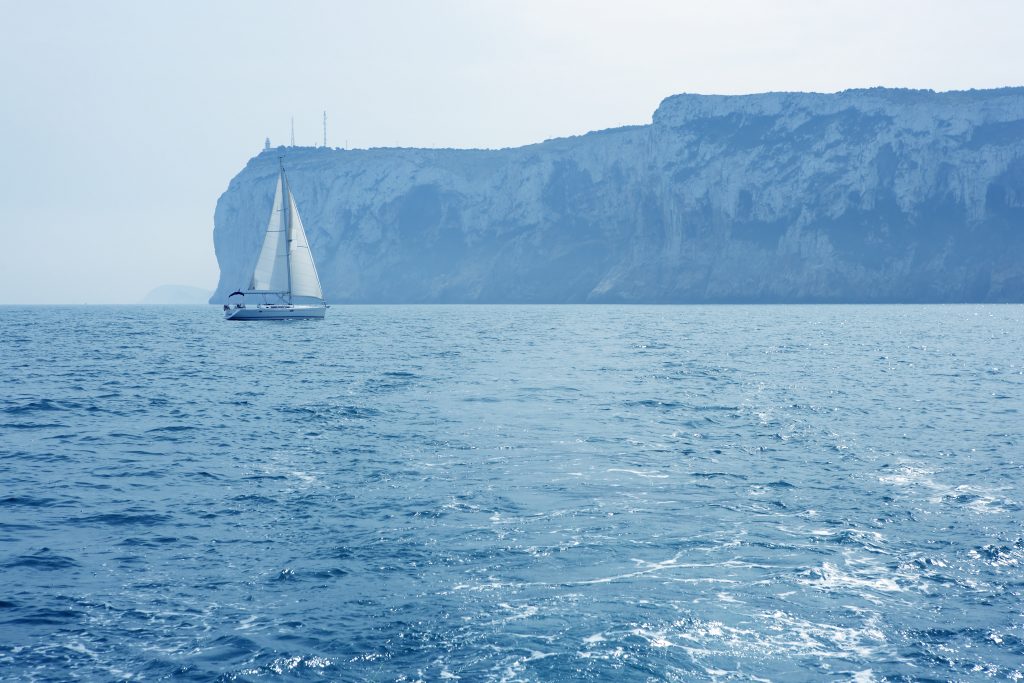
Did you know these details of the history of Denia? Rent a boat and discover its historical corners up close.



 English
  Spanish