An excursion to Cova Tallada is one of the must-see experiences if you want to know the most emblematic corners of Denia. Please note that in order to access the interior it is necessary to make a reservation in advance, as there is a capacity limit.
Here we tell you a little more about the history of this cave and its location, the Montgó Park. In addition, we give you some tips to make the most of your trip to Cova Tallada...
Geographical context: Montgó Park, a protected area you should know.
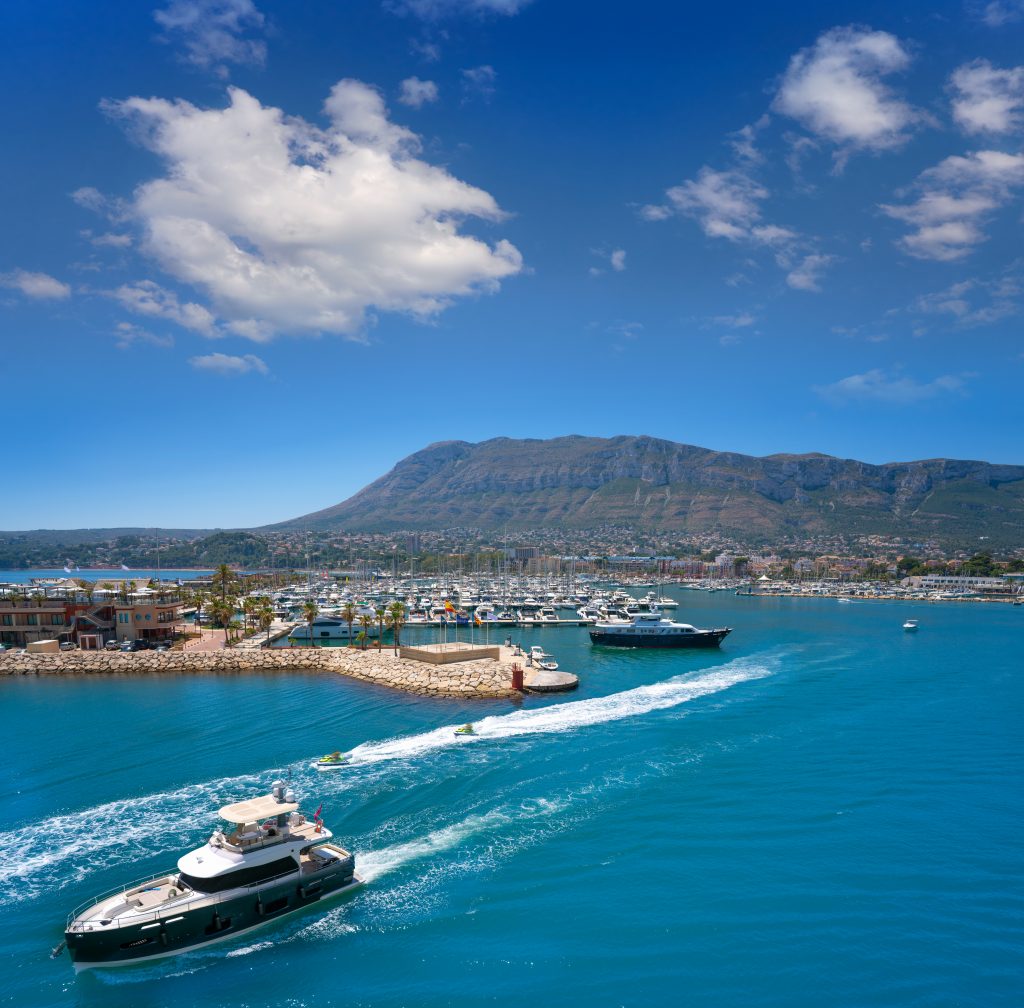
It received its name in 1987. This park, declared a protected natural area, occupies more than 2000 hectares between the towns of Xàbia and Dénia. With a limestone massif that reaches a maximum altitude of 753 meters, it is in direct contact with the sea.
Its coastal area includes the plain of Les Planes and ends at the well-known cliffs of Cabo de San Antonio, where you can find a Marine Nature Reserve with an enormous underwater biodiversity.
One of the most valuable assets found in the interior of the Montgó Park is a vast variety of plant species. In total more than 650 can be found. Some of the most popular ones are the marine juniperThe most characteristic species is the Posidonia oceanica, the herba santa, the toothed lavender or the sea fennel. Although if there is a characteristic species is the Posidonia oceanica.
In addition, its natural wealth extends to the presence of a unique native fauna such as the Audouin's gull or various birds of prey such as the eagle owl, peregrine falcon or Bonelli's eagle.
Excursion to Cova Tallada: Tips to enjoy the experience to the maximum
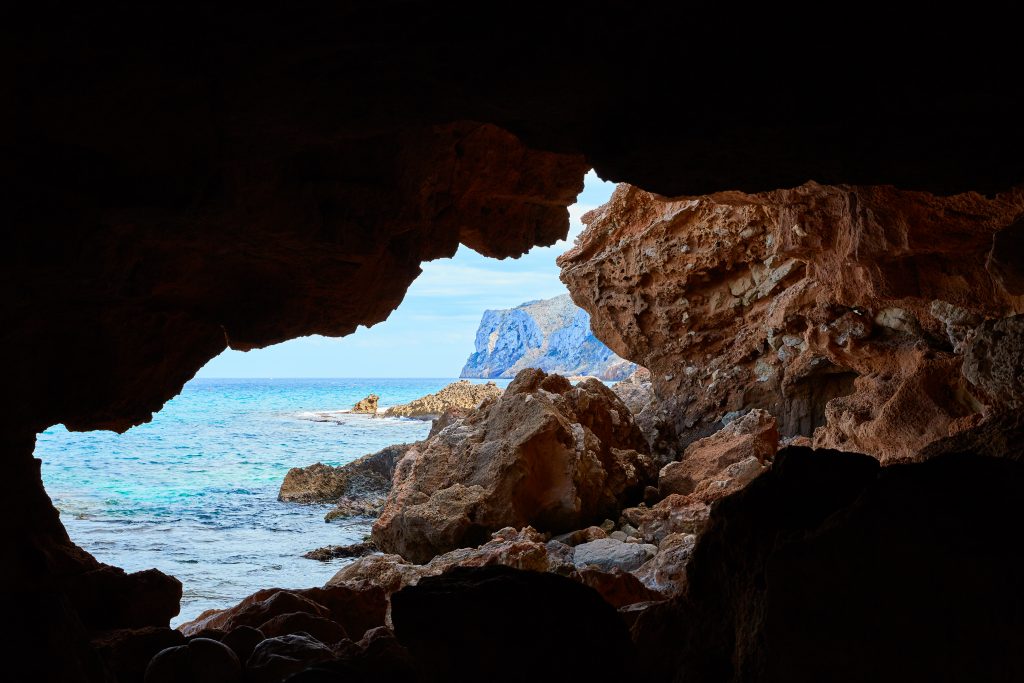
Inside the cave
If the excursion to Cova Tallada takes place during the summer season (especially if it is done during the month of August), it is preferable to do it during weekdays. It is most common that on weekends there are crowds and it is difficult to find parking in the area.
In addition, to enjoy the experience and practice tourism in a sustainable way, it is recommended that the day of the excursion to Cova Tallada you take with you:
- A bag in which to store the waste and residues you may generate during your getaway, remember to practice respectful and hygienic tourism!
- Comfortable clothing: Opt for sturdy, closed-toe shoes, light clothing and sunscreen.
- Food: Try not to carry too much weight for your own comfort. The most affordable will be a small backpack with a small reserve of water and some food.
- Flashlight: This is important because throughout the excursion to Cova Tallada you will access areas of the interior deprived of light. In addition, its route on foot is irregular.
- Your diving equipment: Don't forget it if you intend to practice snorkeling (we recommend it).
Snorkel practice
You can enter the water from inside the cave or by accessing it through the openings that connect directly to the sea. The structure of the rock formation acts as a natural breakwater so that most of the time the waters are usually calm. The most advisable is to make a tour taking as a reference the stone wall, surrounding the structure of the massif.
The Tosca rock: A unique geological formation in the world
Tosca stone is the result of a very special natural sedimentation process produced over a period of thousands of years. It is a calcareous rock that has a porous texture and is quite unusual. Tosca stone is present in very few corners of the world.
Today it has become a distinctive element of the architecture of Xàbia that can be found in some of the most emblematic buildings such as the Church of Sant Bertomeu or the towers of the castle of Dénia. It was quarried for centuries, although it was not only extracted from the Cova Callada. There were reserves of rough stone in the Primer and Segundo Muntanyar.
However, this extraction was prohibited relatively recently. The last time that rough stone was used in urban development projects was around the 1950s and 1960s. It was in 1972 that a regulation came into force prohibiting its use as a measure to protect the environment. Today it is only possible to use this material when an old construction based on rough stone is demolished.
Torre del Gerro: A key point in the Cova Tallada routes.
One of the points of interest that can be found within the Montgó Park is the Torre del Gerro, located on the cliffs of Les Rotes and from where you can enjoy stunning panoramic views of the coast.
This watchtower was built around the sixteenth century, as a strategic point of surveillance against Berber enemy invasions, quite common in that period. Together with fortifications such as the Torre del Cap d'Or, the Torre del Gerro made up a network of watchtowers that were built between the 16th and 17th centuries.
At an altitude of more than 130 meters above the cliffs of Sant Antoni, it presents an imposing structure of circular plan adorned with the coat of arms of Charles V.
Would you like to book your excursion to? Cova Tallada¡Contact us!



 English
  Spanish